In 2025, Termez State University (TerSU) provided research-based input to public-sector planning and the identification of regional development challenges in Surkhandarya, Uzbekistan. Through its Centre for Regional Studies and university leadership, TerSU contributed to government-requested environmental research, discussed tourism-development planning with the regional administration, and reported a broader portfolio of district-level research proposals. These activities are relevant to policy development under SDGs 8, 11, 13, 15 and 17.
Government-Requested Desertification Research and Policy Recommendations
11–26 July 2025. Acting in response to Surkhandarya Regional Administration letter No. 04-04/1636, dated 11 July 2025, researchers from TerSU’s Centre for Regional Studies worked with scientists from the Xinjiang Institute of Ecology and Geography, Chinese Academy of Sciences (China) on the Kattaqum desert area in Termez and Jarkurgan districts. The regional problem under examination was the impact of moving sand dunes and hot desert winds on nearby settlements.
The university reported site investigations, environmental monitoring, remote sensing, mapping and analysis in support of potential measures to reduce desertification risks. Research-based options under development included sand-dune stabilisation, green shelterbelts, vegetation suited to desert conditions and protection of settled areas. This is documented government-requested scientific input into problem identification and proposed interventions, rather than proof that every proposed intervention had already been adopted or implemented.
Official sources: TerSU SDG website, 26 July 2025
Contribution to the Regional Ecotourism Master-Planning Process
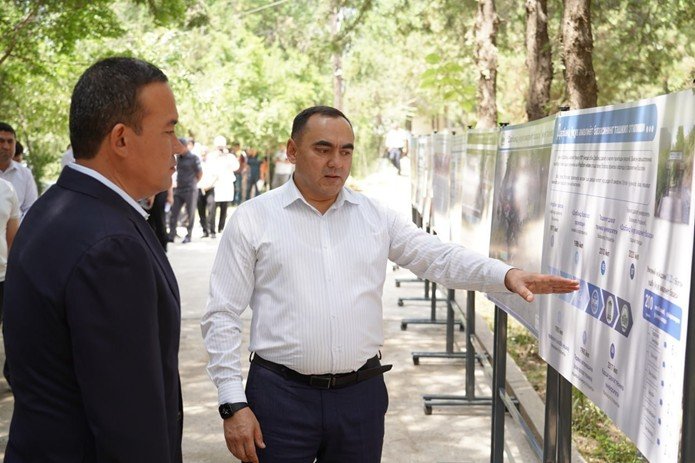
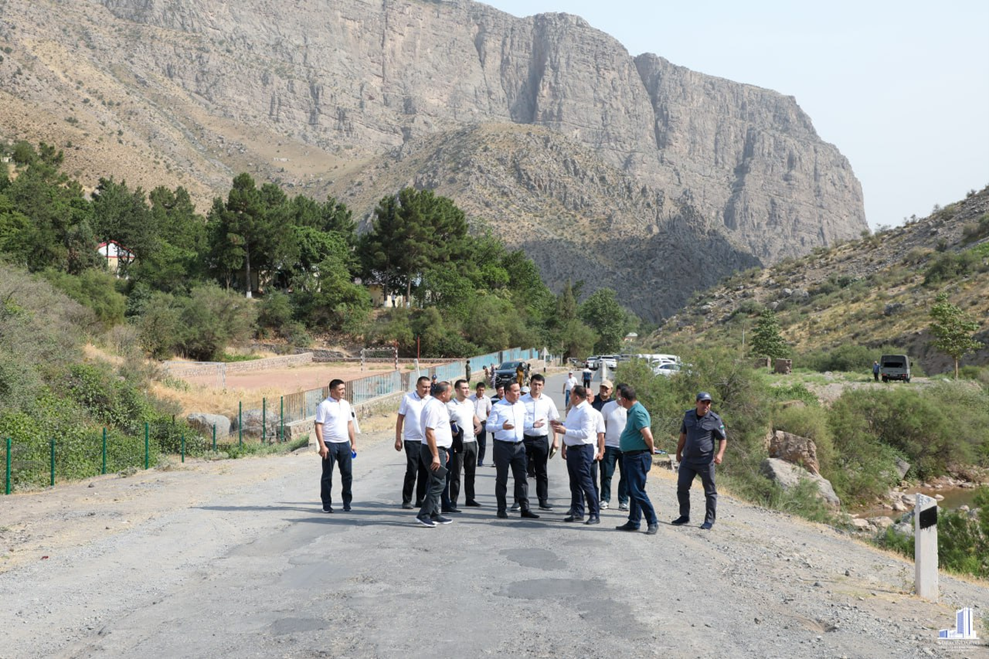
25 June 2025. Following a national decision calling for a master plan for the Xo‘jamayxona Gorge tourism area, Surkhandarya Governor Ulugbek Qosimov visited TerSU’s Darband teaching and field-practice base. During the visit, the university rector presented project opportunities and proposals associated with the site and its use for regional development.
The delegation also examined the draft tourism master-planning materials on site. Options discussed for improving the plan included zip lines, capsule accommodation, hiking and hard-trekking routes, and approximately 5 km of cycling and walking paths. The 2025 account establishes the university’s direct participation in a government-led planning discussion; it does not by itself establish that TerSU formally approved or authored the master plan. A further visit reported in November 2025 reviewed implementation work and the need to protect the natural landscape.
Official sources: TerSU SDG website, 25 June 2025 | TerSU update, 24 November 2025
District-Level Evidence-Based Development Proposals
2024/2025 academic-year review, reported in September 2025. At the expanded meeting of the University Council, TerSU reported that its Centre for Regional Studies had produced more than 200 research-based proposals for 14 districts of Surkhandarya, of which 20 had been put into practice. The university’s published remit for the Centre includes identifying regional challenges, undertaking strategic analysis and preparing recommendations for public institutions.
The figures indicate the scale of TerSU’s applied research contribution to regional development.
|
14 Districts covered |
200+ Research-based proposals |
20 Reported as implemented |
Contribution to SDG Policy Development
Together, these projects document direct research and planning input to public authorities on regional environmental risks, tourism and district development - rather than conference participation alone. The activities relate to SDGs 8, 11, 13, 15 and 17.